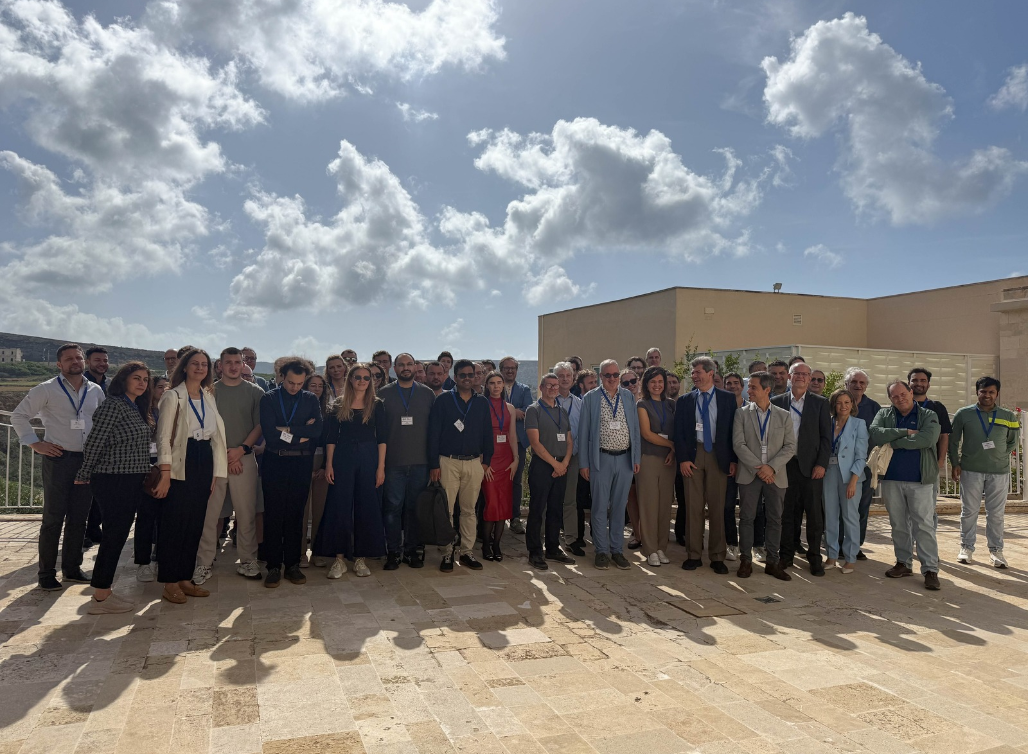
How can artificial intelligence become more efficient, reliable and autonomous while operating on devices with limited resources? How can distributed systems coordinate securely, and what technologies will enable the next generation of intelligent vehicles, robots and industrial applications? These questions were at the centre of the European Conference on Edge AI Technologies and Applications (EEAI 2026), held from 19 to 21 October at the Radisson Blu Resort in Golden Sands Bay, Malta.
Over three days, the conference brought together researchers, technology developers and industry representatives to share advances across Edge AI hardware, software, architectures, algorithms, frameworks and applications. The programme combined plenary talks and project presentations with parallel technical sessions, offering a broad overview of the technologies moving artificial intelligence closer to where data is generated and decisions need to be made.
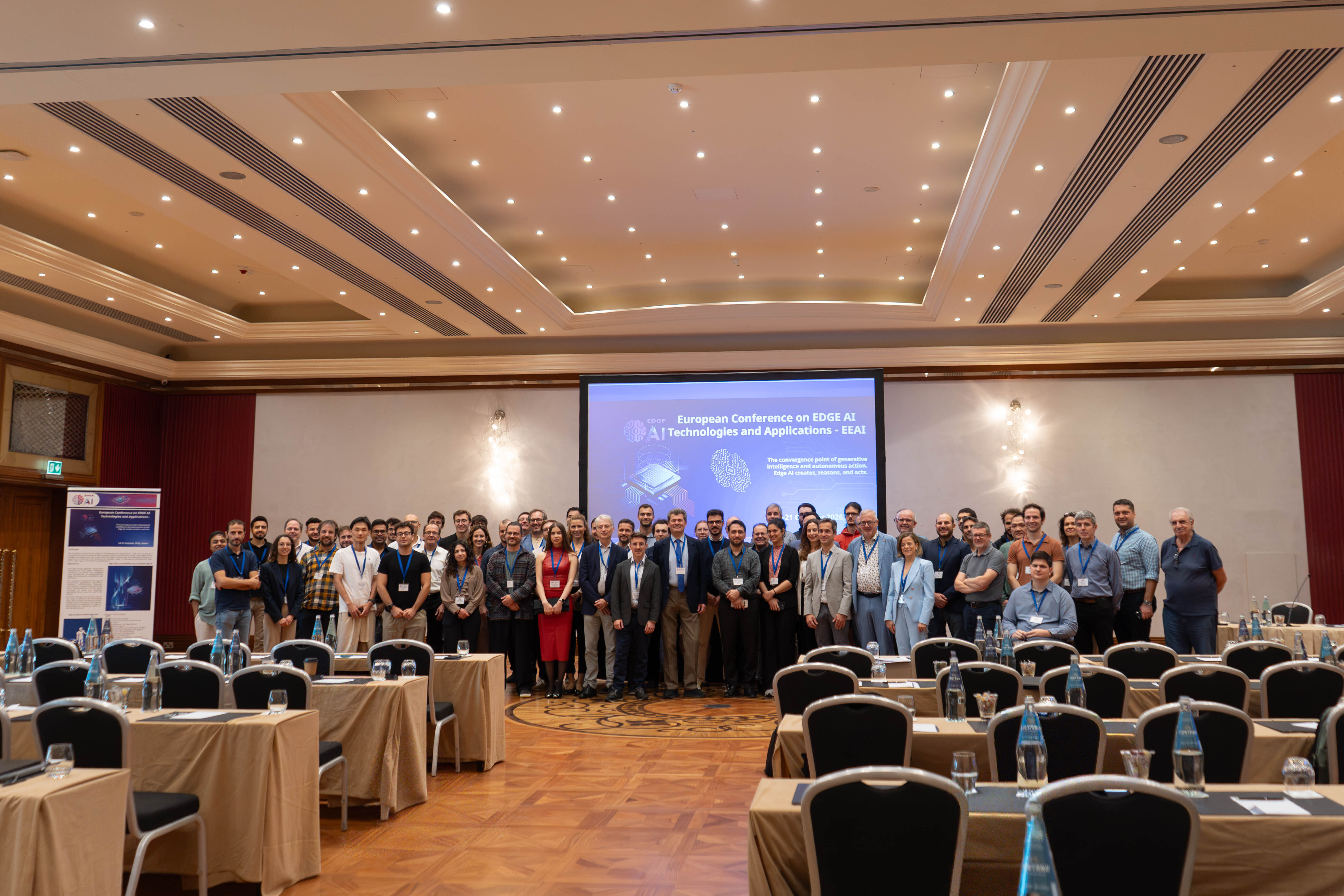
- Day 1: Building faster, more secure and collaborative Edge AI systems
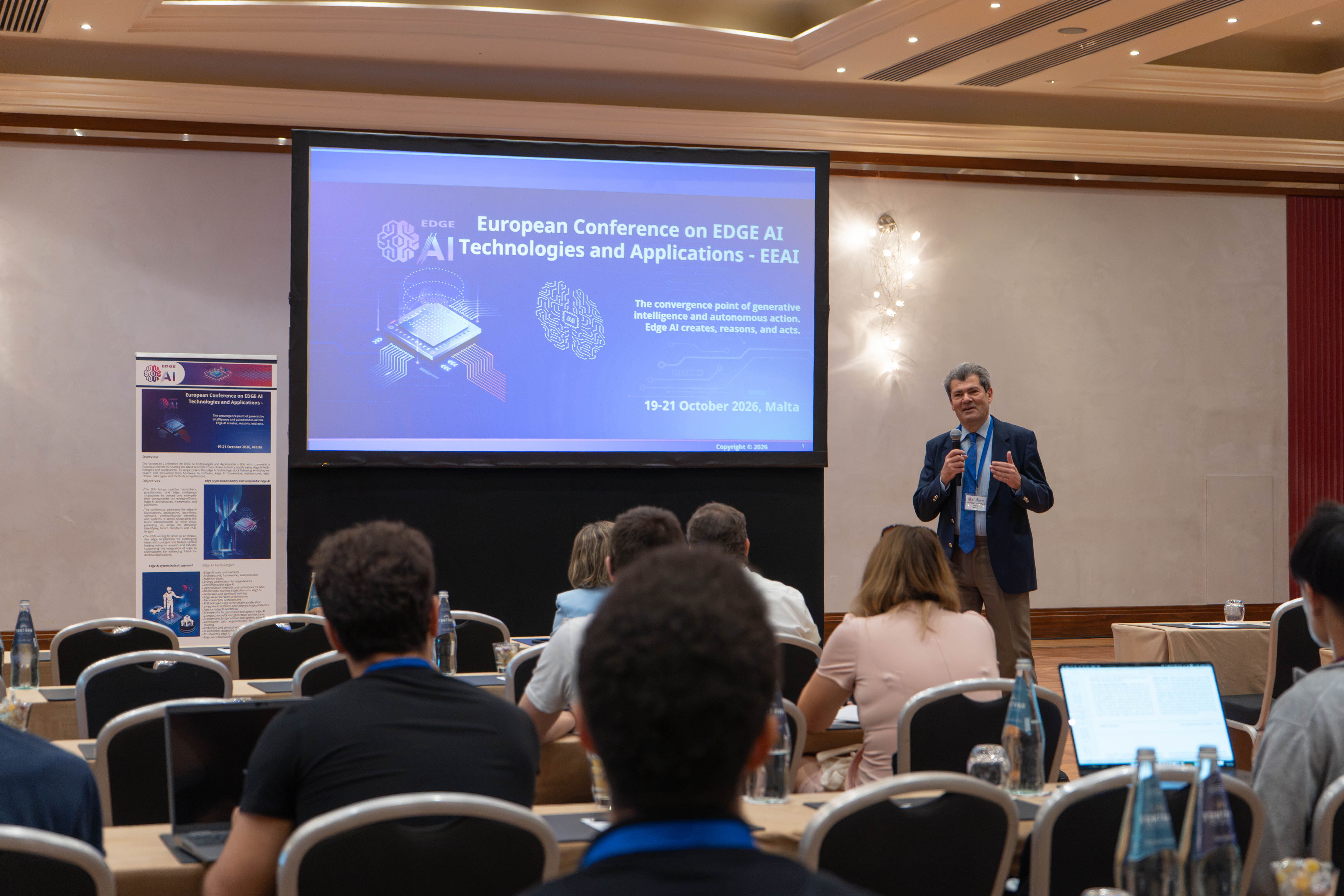
The conference opened on 19 October with the plenary session Intelligence at the Frontier, chaired around the growing role of Edge AI in the physical world. Ovidiu Vermesan from SINTEF explored the transition from real-time intelligence towards embodied agentic workflows, while Laurent Filipozzi from STMicroelectronics presented real-world robotics applications in manufacturing. The session also featured project pitches from Chips JU TURANDOT and IRIS-XR.
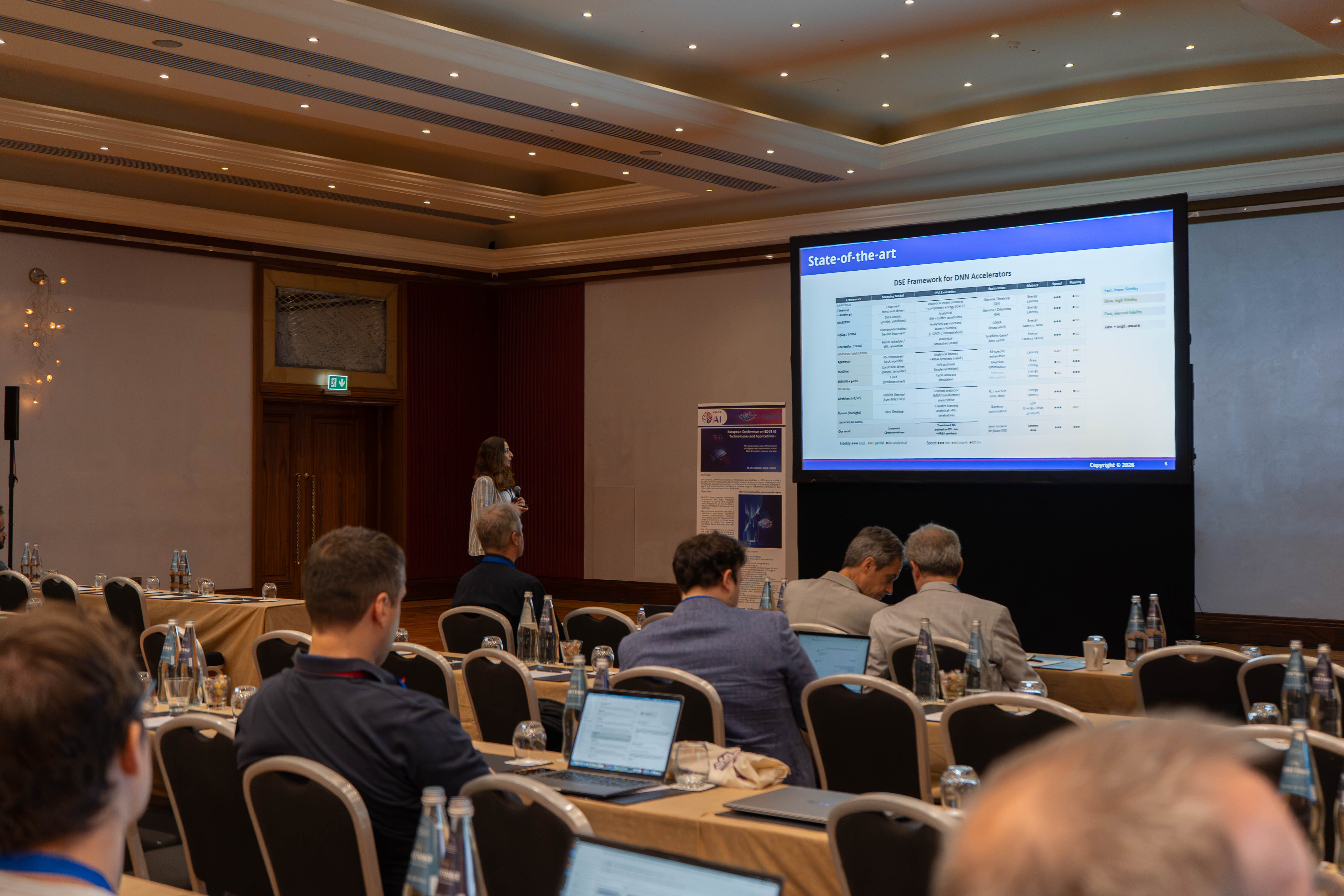
The first parallel sessions examined two complementary foundations for Edge AI: hardware acceleration and trustworthy deployment. In Accelerating Next-Generation Edge Hardware, contributions addressed efficient convolutional neural network processing, machine-learning-driven estimation of latency and chip area, FPGA-based acceleration and predictive intelligent lighting. Among the presentations were Ahmed Mohey and Jacek Flak's charge-summing hardware engine, Hana Krichene's work on NoC-based CNN accelerators, Gleb Radchenko's KRIA UltraScale+ MPSoC system and Weronika Bak's predictive Edge AI approach to mesh lighting.
At the same time, Securing the Trustworthy Edge Stack focused on the security and privacy challenges involved in deploying AI across distributed environments. Alessandro Biondi discussed trustworthy Edge AI, from design-space exploration to secure deployment; Azarm Yeganehfallah presented a privacy-preserving communication framework for IoT sensors; and Oksana Dikareva explored evidence-anchored validation in multi-stage large language model pipelines.
The afternoon continued with two parallel research areas. Neural Optimization and Cascade Pipelines explored techniques to make inference more efficient, including confidence-shaped regression cascades, multi-model cascades, energy optimisation for smart water tanks and attention-guided mixed-precision quantisation of Vision Transformers. Meanwhile, Federated Continuum and Orchestrated Learning addressed how intelligence can be coordinated across edge and cloud environments. Contributions included immutable containers for supply-chain integrity, federated distillation for resource-constrained devices, agentic AI for autonomous optical inspection and the EXPANSE AI initiative.
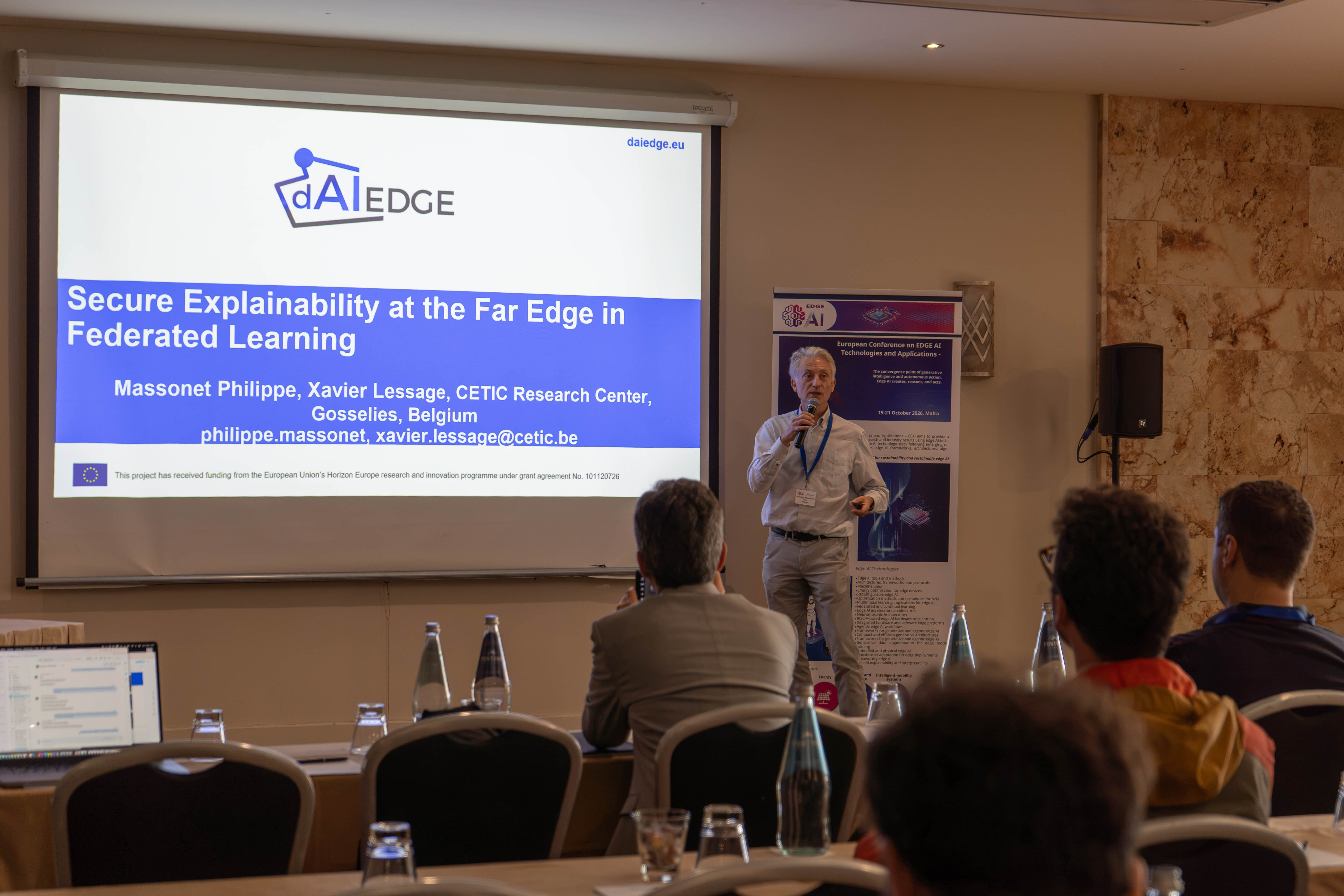
The day concluded with a focus on neuromorphic computing and privacy-preserving collaboration. Neuromorphic Computing and Event-Based Processing brought together work on spiking neural networks, FPGA-based low-power personalisation, event-based visual odometry and audio-visual speech recognition for human-robot interaction. In parallel, Robust and Private Federated Learning examined gradient inversion attacks, encrypted model aggregation, secure explainability at the far edge and selective learning for trustworthy federated systems. The contributions by Francesco Diana, Varesh Mishra, Philippe Massonet and Dana Bezryma highlighted the importance of protecting both data and model behaviour when learning takes place across multiple devices.
- Day 2: Transformers, autonomous agents and advanced vision systems
On 20 October, attention shifted towards the models and architectures enabling more capable AI systems to operate under edge constraints. The plenary session Sustainable Autonomy Continuum featured Patrick Pype from NXP, who discussed the future of autonomous and anticipating systems, and Valeria Tomaselli from STMicroelectronics, who explored the rise of physical AI. Project presentations from Chips JU REBECCA and AFarEDGE completed the session.
The morning's parallel sessions addressed efficient model execution and autonomous decision-making. Quantized Transformers and On-Chip Acceleration explored ways to bring increasingly complex models to resource-constrained hardware. Mohamad Hasan Bahari presented Q-WiSE, a quantised speech-enhancement approach for ultra-low-power micro-edge processors; Mateusz Piechocki and Alessandro Capotondi examined on-device continual and federated adaptation for solar irradiance forecasting; Simon Vellas presented a sparse, integer-only accelerator for Vision Transformer attention on a low-cost FPGA; and Saeid Jamili discussed compact Vision Language Model and Large Language Model inference on SoC-FPGA platforms.
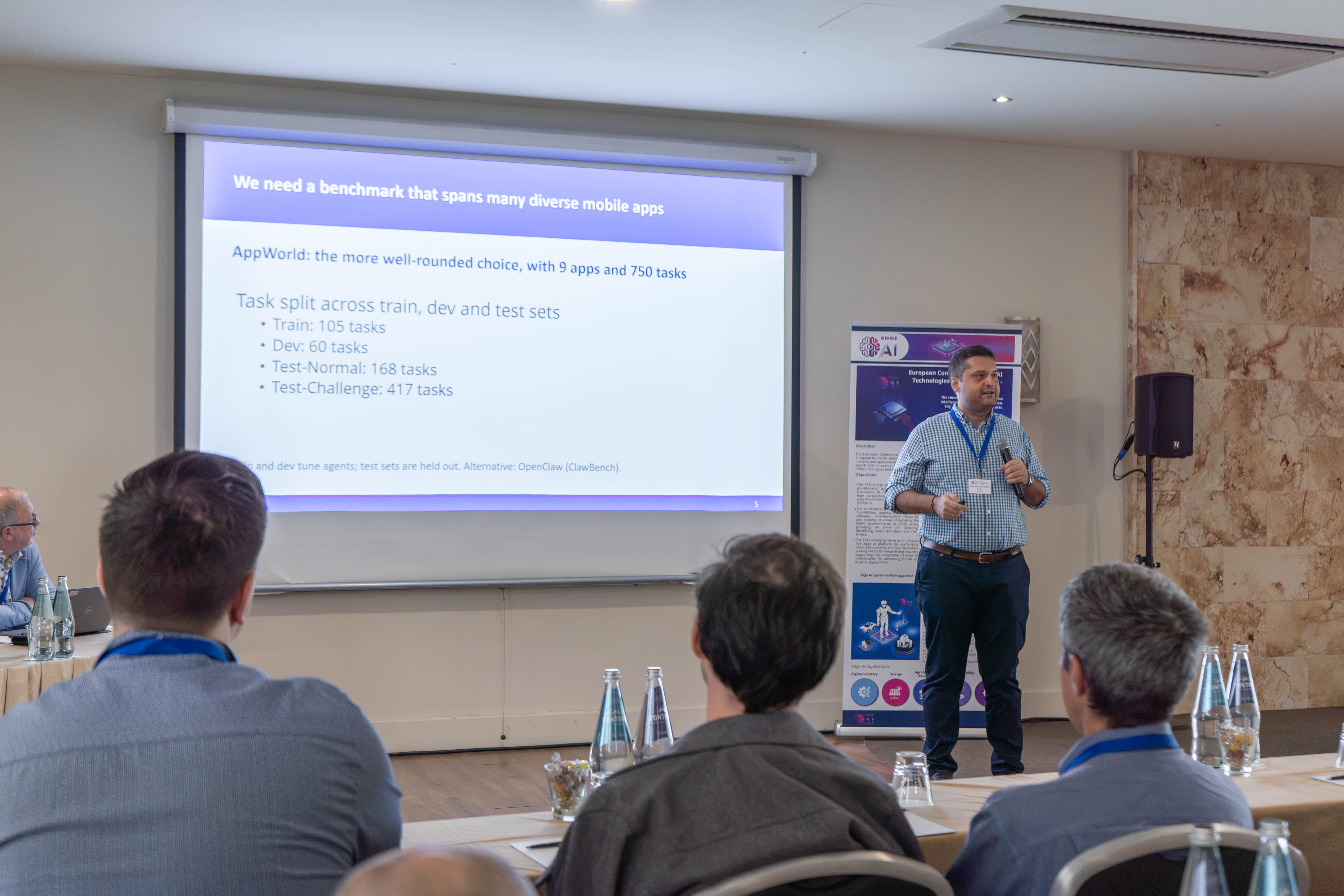
In parallel, Autonomous Agents and Robotic Planning examined how AI agents can operate reliably and efficiently at the edge. The session included Christos Kozanitis's work on small models and specialised skills for edge agents, Pramod Bhatotia's contribution on trusted AI agents, Toms Eduards Zinars's locally deployed LLM-based planner for robotic systems and Ovidiu Vermesan's perspective on AI-native physical and embodied autonomous systems.
The afternoon brought together research on advanced perception, resource management and multimodal intelligence. In Advanced Vision and Semantic Mapping, researchers explored embedded open-vocabulary semantic mapping, language-guided and self-supervised terrain segmentation, real-time vineyard segmentation and vision-guided robotic surface rework. The parallel session, Adaptive Allocation and Reconfigurable Scheduling, addressed efficient resource allocation, GPU sharing and reconfiguration, automated allocation for edge testbeds and secure computing platforms for telecommunications operators.
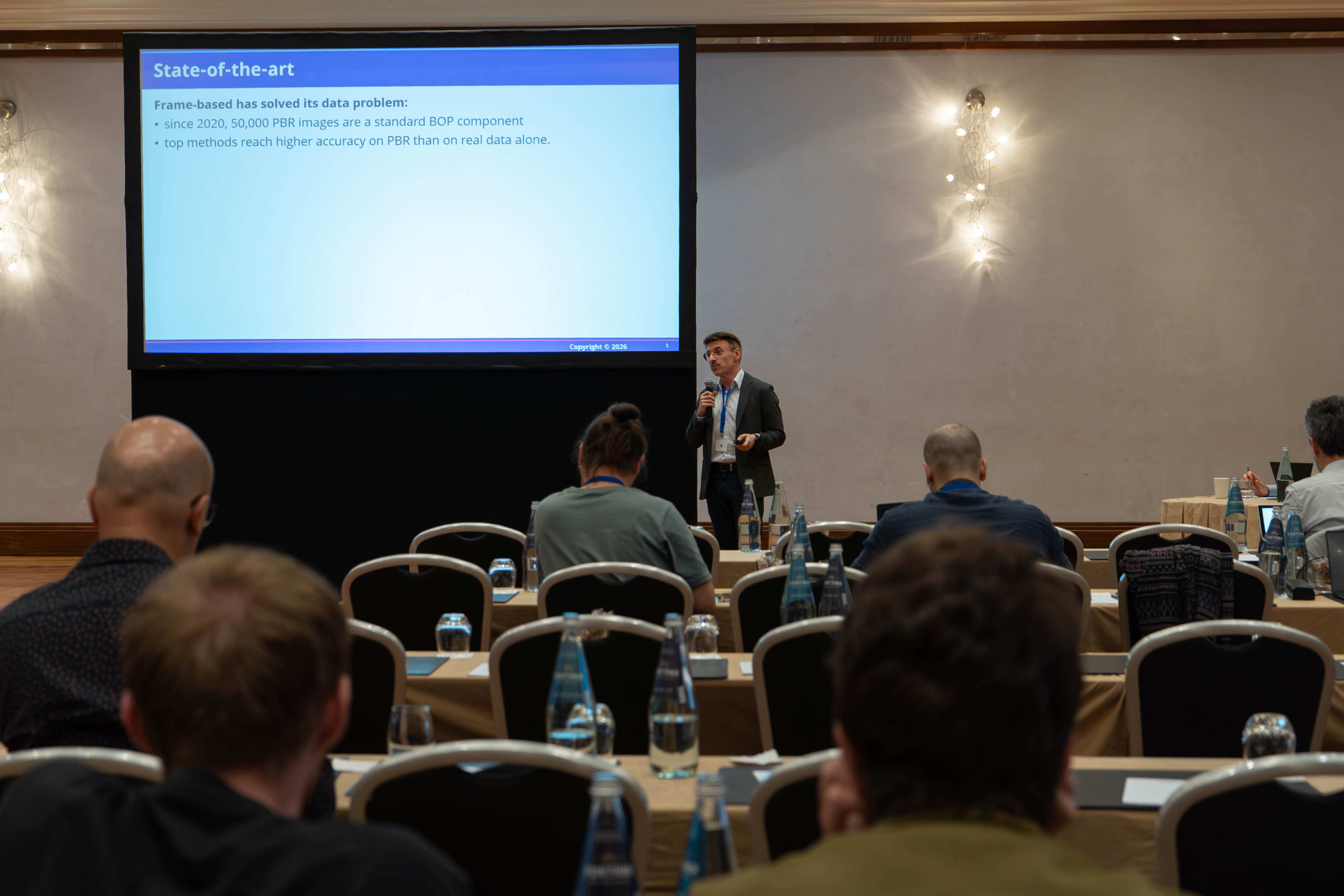
The final technical block examined how increasingly sophisticated vision and multimodal models can be adapted to edge environments. Efficient Multimodal and Vision Models included Martyna Poreba's hardware-aware study of visual token pruning for Vision Language Model inference, Pavel Rojtberg's work on synthetic training for event-based 6D pose estimation, and Óscar Deniz Suárez's presentation of a hierarchical edge-to-server pipeline for weapon recognition using large multimodal models. Alain Pagani also discussed advanced trends in vision processing at the edge.
Alongside this, On-Device Adaptation and Edge Control explored efficient model adaptation using commercial edge accelerators, the costs of synchronisation in programmable architectures, compact liquid neural networks for high-frequency edge control and adaptive remaining useful life prediction for automotive MOSFETs. Together, these contributions addressed a central challenge for Edge AI: enabling systems to adapt and make decisions locally without exceeding the available computational and energy budgets.
- Day 3: Connected mobility, autonomy and industrial platforms
The final morning of EEAI 2026, on 21 October, focused on the role of Edge AI in connected vehicles, autonomous systems and industrial environments. The plenary session Resilient Edge AI in Action featured Patrick Pype from NXP, who presented developments in European RISC-V and AI accelerators for future vehicle electrical and electronic architectures. Giulio Gambardella from Synopsys followed with a talk on how AI-powered technology is accelerating innovation and engineering productivity. Project pitches completed the plenary programme.
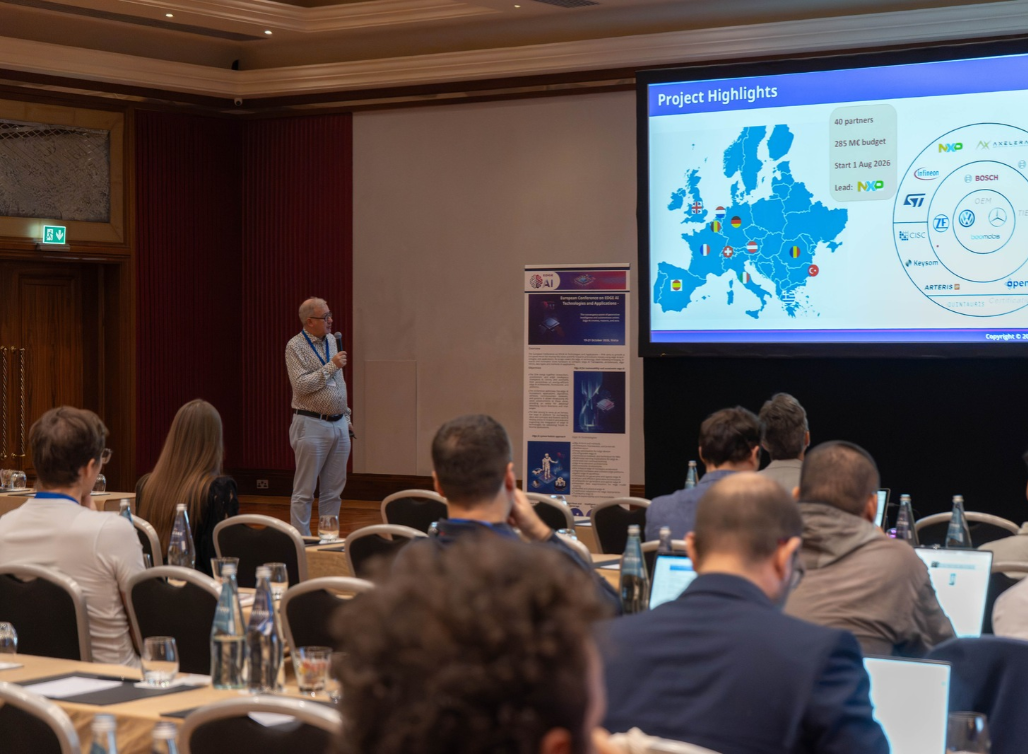
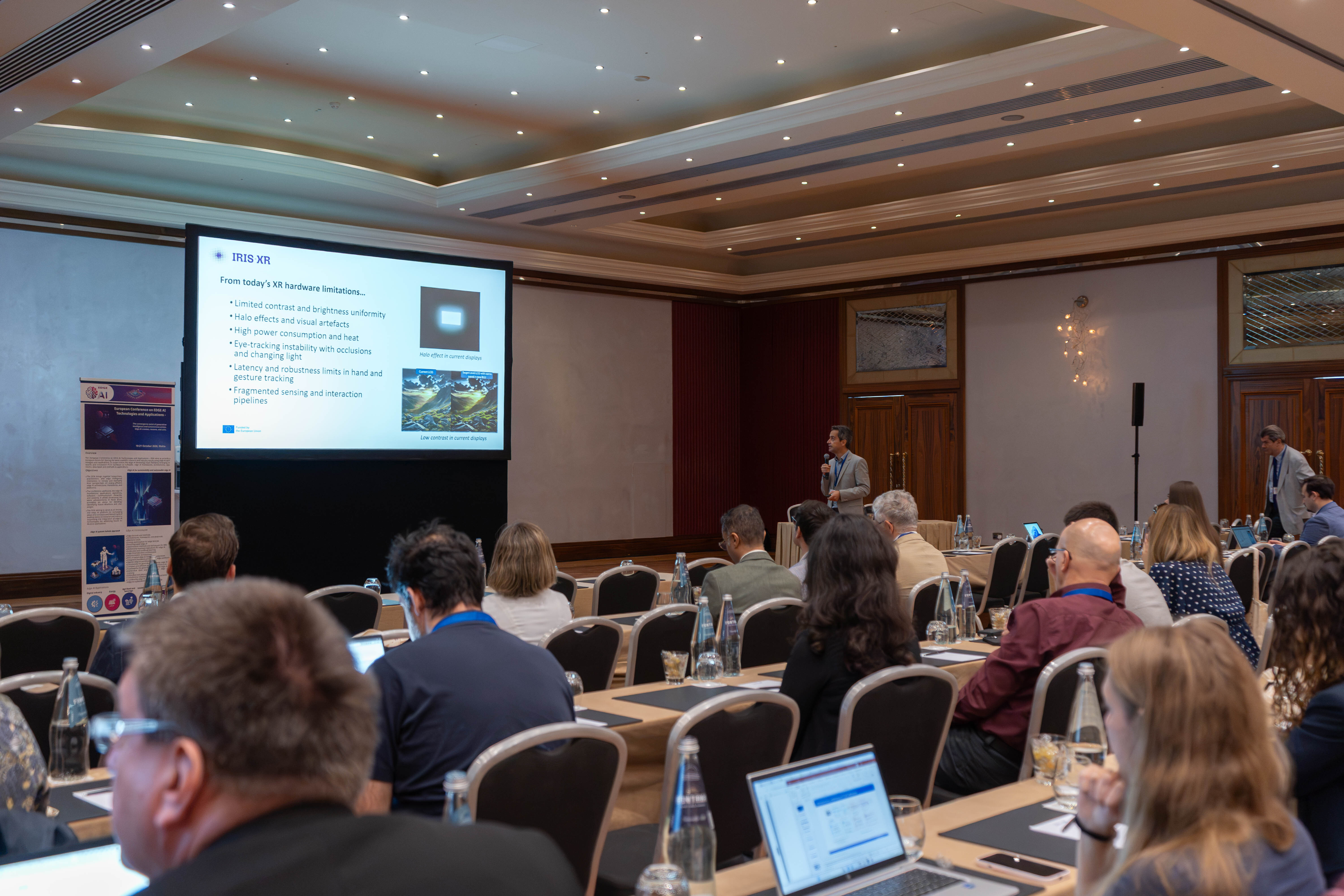
Two parallel sessions then explored how these technologies can be applied in practice. Connected Vehicles and Immersive Edge covered edge-cloud frameworks for heterogeneous data streams in connected vehicles, real-time driver monitoring using CPU-FPGA architectures, agentic multimodal systems in autonomous applications and M.AI.ESTRO, a virtual-reality-based skills guidance solution powered by Edge AI. The contributions included work by Md Forhad Hossain, Mhd Rashed Al Koutayni, Ovidiu Vermesan and Graham Pellegrini.
In parallel, Energy-Constrained Scheduling and Processing examined the challenges of running intelligent systems under strict energy, connectivity and mission constraints. Jérémy Turi discussed scheduling for extreme edge autonomy, while Lorenzo Carnevale addressed real-time scheduling under intermittent connectivity. Michal Szczepanski explored energy expenditure as an allocation problem in continuously operating Edge AI, and Vaisakh Shaj Kumar presented an efficient and uncertainty-aware approach to sequence modelling.
Following the morning sessions and networking lunch, EEAI 2026 concluded its programme, making way for the dAIEDGE Innovation Days, which began at the same venue that afternoon.