


The Innovation Days began on the afternoon of 21 October, following the European Conference on Edge AI Technologies and Applications (EEAI 2026), held at the same venue.
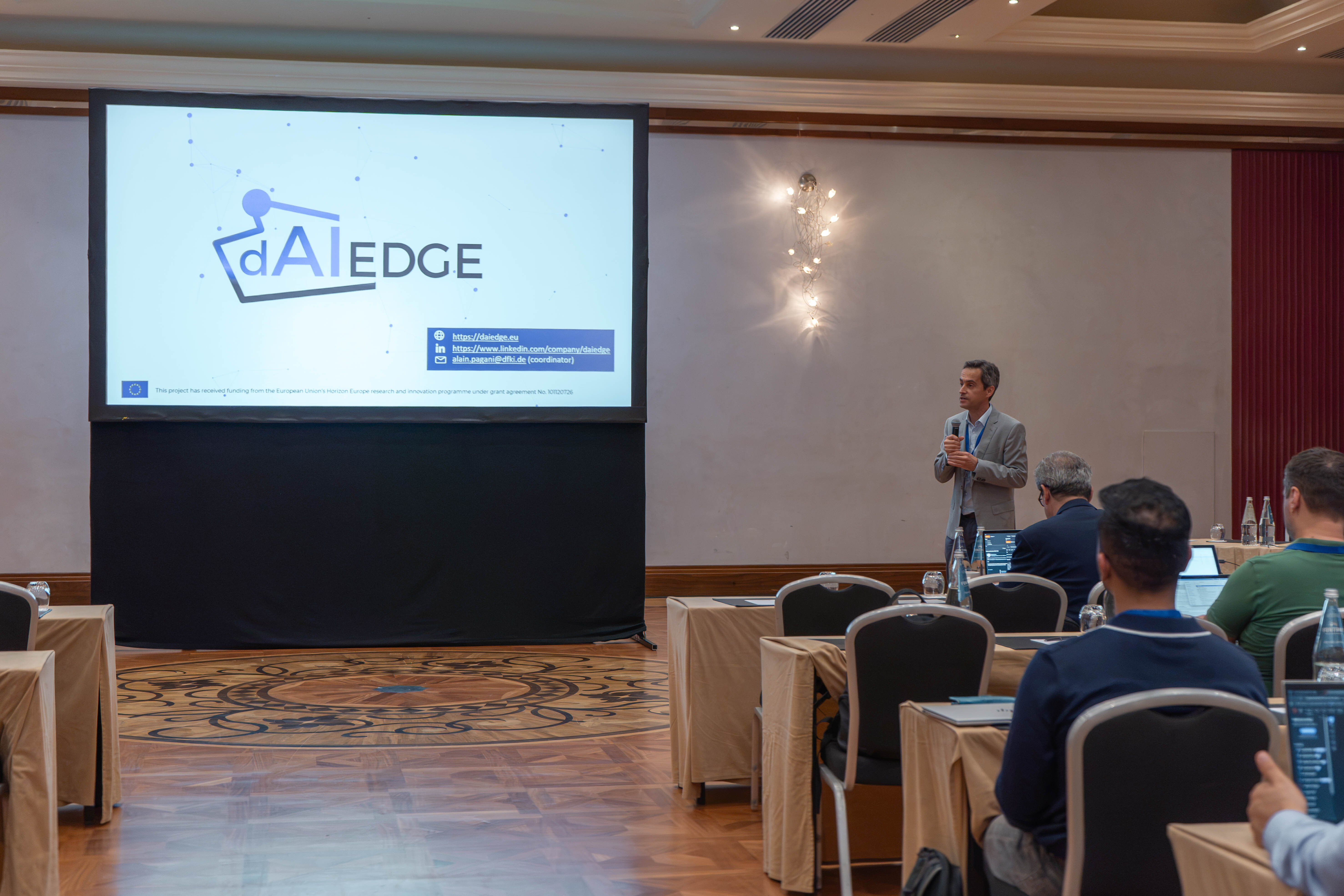
Alain Pagani, dAIEDGE Coordinator from DFKI, welcomed participants and introduced the programme. The opening plenary, Distributed and Collaborative Edge Intelligence, explored Europe's strategic ambitions in this field. It included contributions from Cécile Huet, Head of Unit at the European Commission, and Miguel Rubio, Project Officer, as well as a keynote by Marko Bertogna from the University of Modena and Reggio Emilia and HIPERT. His presentation, Bridging the Valley of Death in Physical AI – Regulatory Moats, Embedded Silicon, and a New Blueprint for European Sovereignty, addressed the challenges of bringing research closer to market deployment.
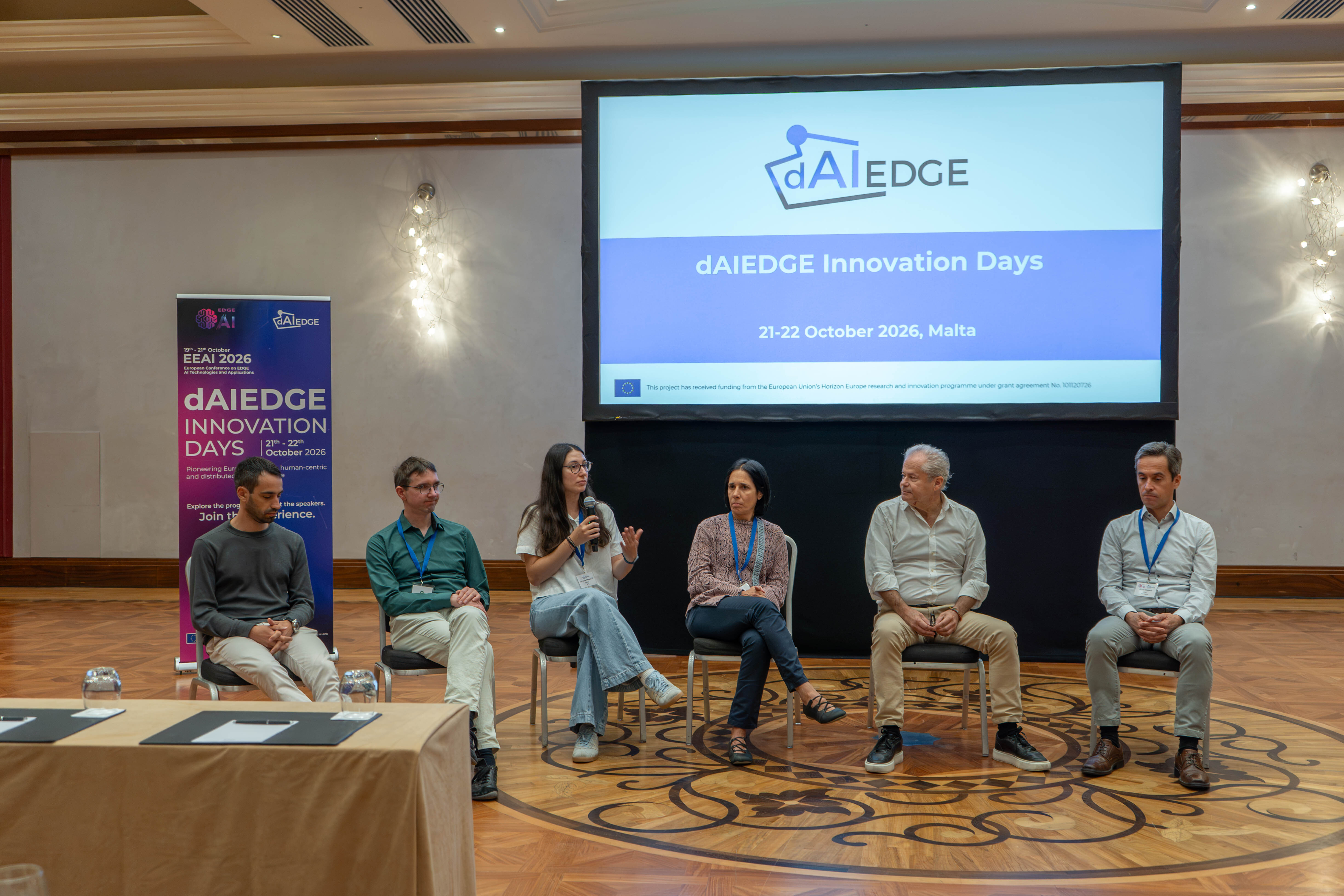
Ovidiu Vermesan from SINTEF and Alain Pagani also presented the European Strategic Research and Innovation Agenda for Edge AI. The discussion continued with the panel Future of Edge AI in Europe: Distributed, Generative and Agentic Intelligence, moderated by Vermesan and featuring Marko Bertogna, Alain Pagani, Antonija Mršić Radas (CroAI), Patrick Pype (NXP) and Giulio Gambardella (Synopsys).
The afternoon featured two parallel research sessions. Predictive Edge and Pipelines explored decentralised active inference, reliable retrieval-augmented generation, IoT optimisation and quantised large language models, with contributions from Panagiotis Kasnesis, Ussama Zahid, Teresa Jacqueline van Dam and José Cano.
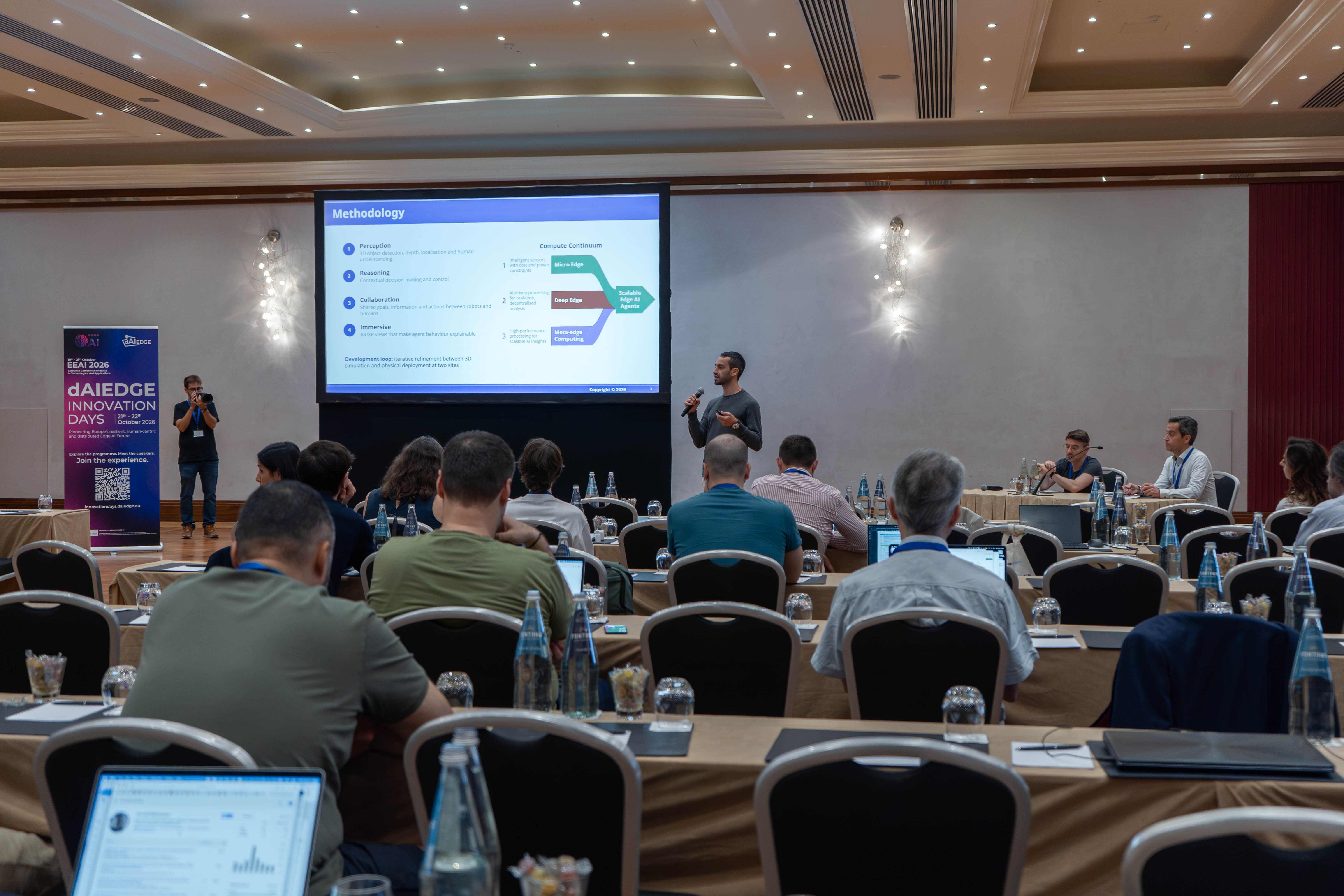
Meanwhile, Industrial IoT and Cross-Sector Applications focused on the use of Edge AI in industrial environments and other practical scenarios, including high-frequency data processing, weapon detection, bipedal locomotion and secure radio access networks. The session featured Ander Garcia Gangoiti, Michael Vasilakakis, Linus Schwarz and Arkadiusz Czuba.
The first day concluded with a keynote by Antonija Mršić Radas on the AI on Demand Platform (AIoD), followed by the dAIEDGE Innovation Cocktail, providing an opportunity for participants to exchange ideas and strengthen connections.
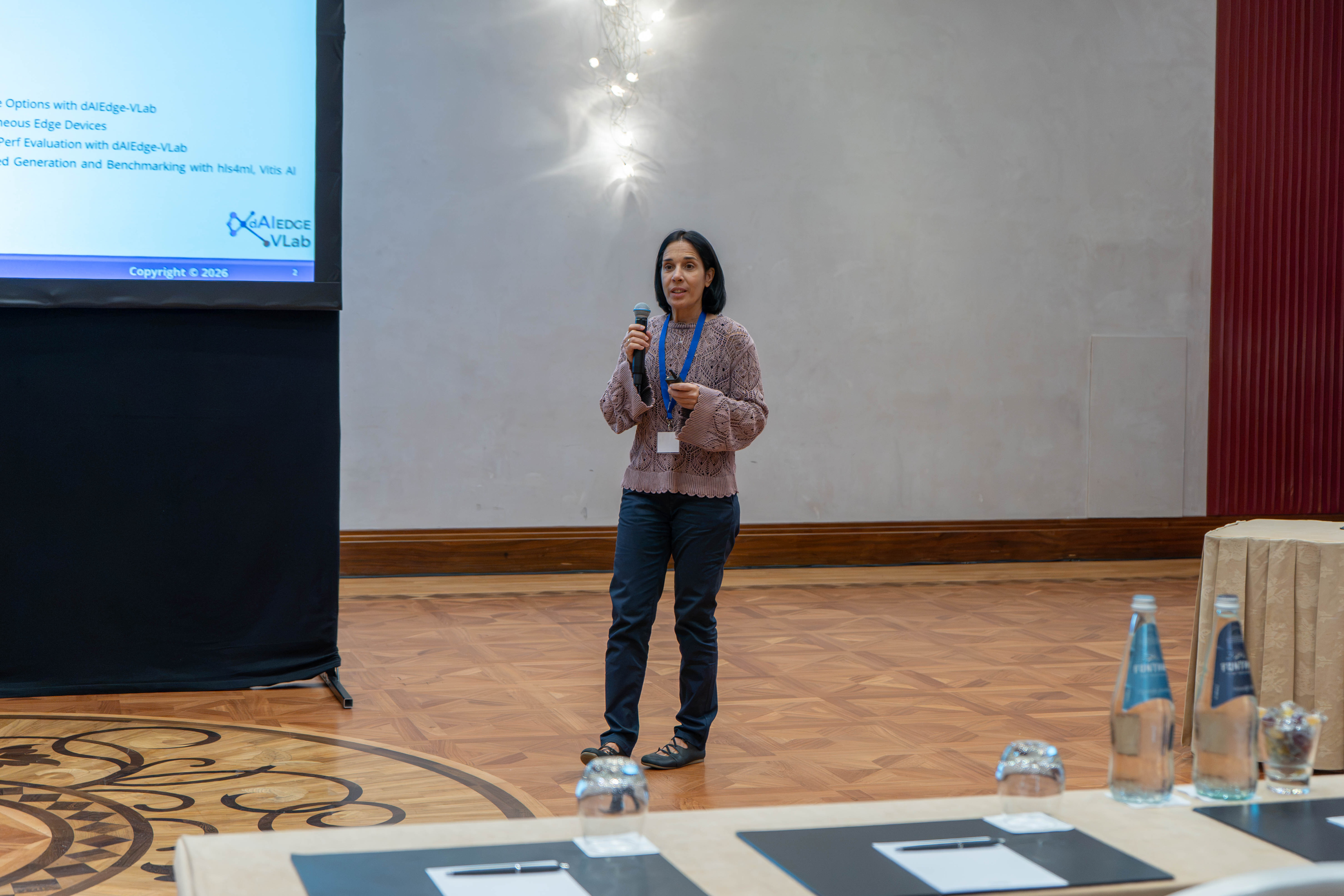
The second day focused on the project's achievements and their potential impact. During the plenary session From Innovation to Impact, Alain Pagani presented the main results of dAIEDGE, while Nuria Pazos Escudero from HES-SO introduced the dAIEDGE-VLab, a distributed virtual laboratory that enables remote experimentation and benchmarking of AI solutions across different hardware environments.
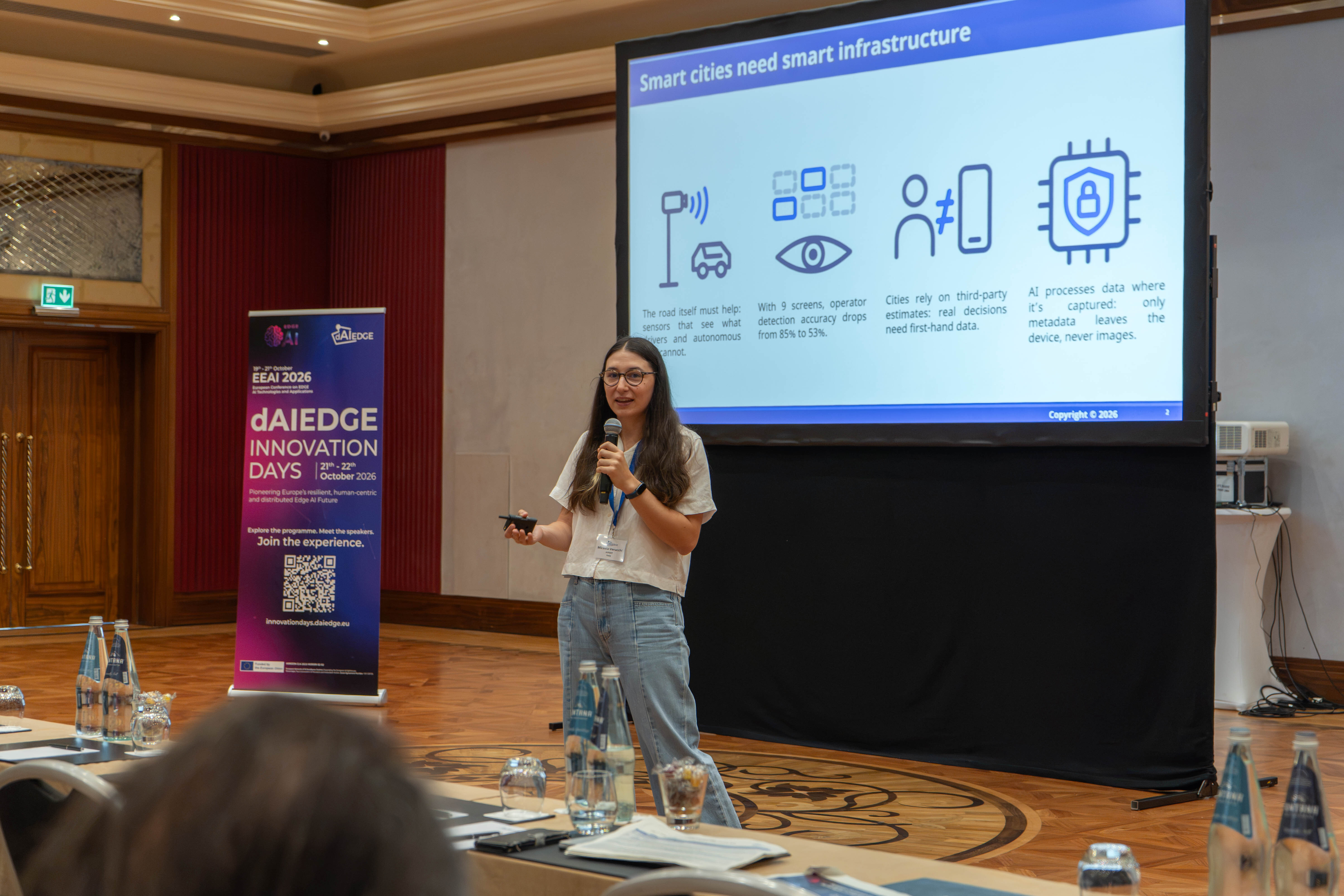
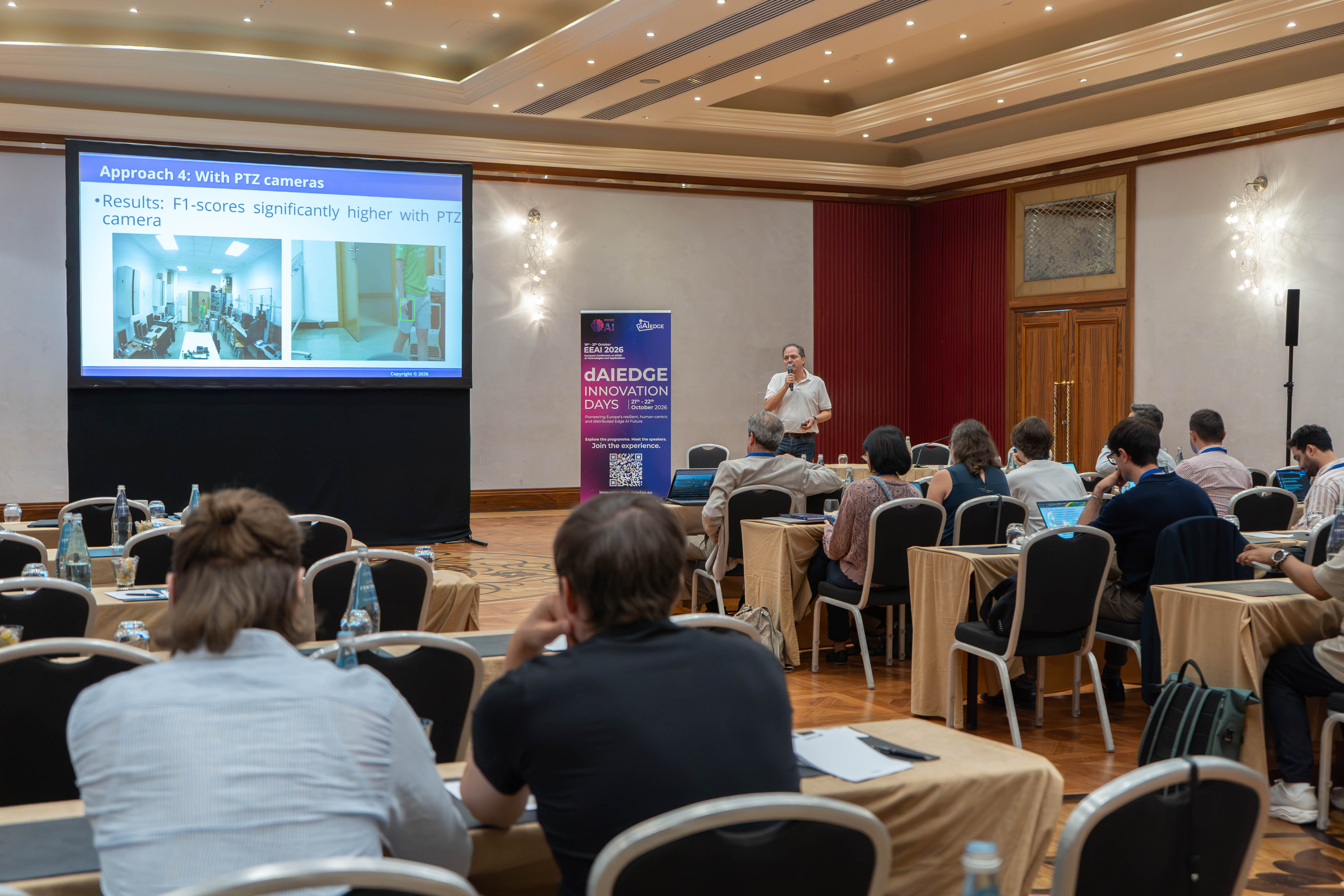
Three use cases demonstrated how these technologies can address challenges across different sectors. Micaela Verucchi from HIPERT presented the Smart City demonstrator; Stefan Wiehle from the German Aerospace Center introduced the space use case; Miguel de Prado from PRAESC explored agentic Edge AI for smart warehouses.
These presentations were followed by the panel A Network of Excellence as Innovation Engine: From Project Results to Market Deployment, moderated by Ovidiu Vermesan and featuring Nuria Pazos Escudero, Micaela Verucchi, Stefan Wiehle, Miguel de Prado and Alain Pagani. The discussion focused on how the results developed within the network can progress towards practical applications and market adoption.
One of the highlights of the event was Edge AI Innovators on Stage, which brought together nine projects supported through dAIEDGE's open calls.
Further contributions included Jérémy Turi from Safran Electronics & Defense, who explored deliberation and resource orchestration as emerging capabilities for Edge AI; Óscar Deniz Suárez from the University of Castilla-La Mancha, who presented work on weapon detection in public buildings; and Rohit Prasad from CEA LIST, who introduced NX-CGRA, an energy-efficient hardware accelerator for Edge Transformers.
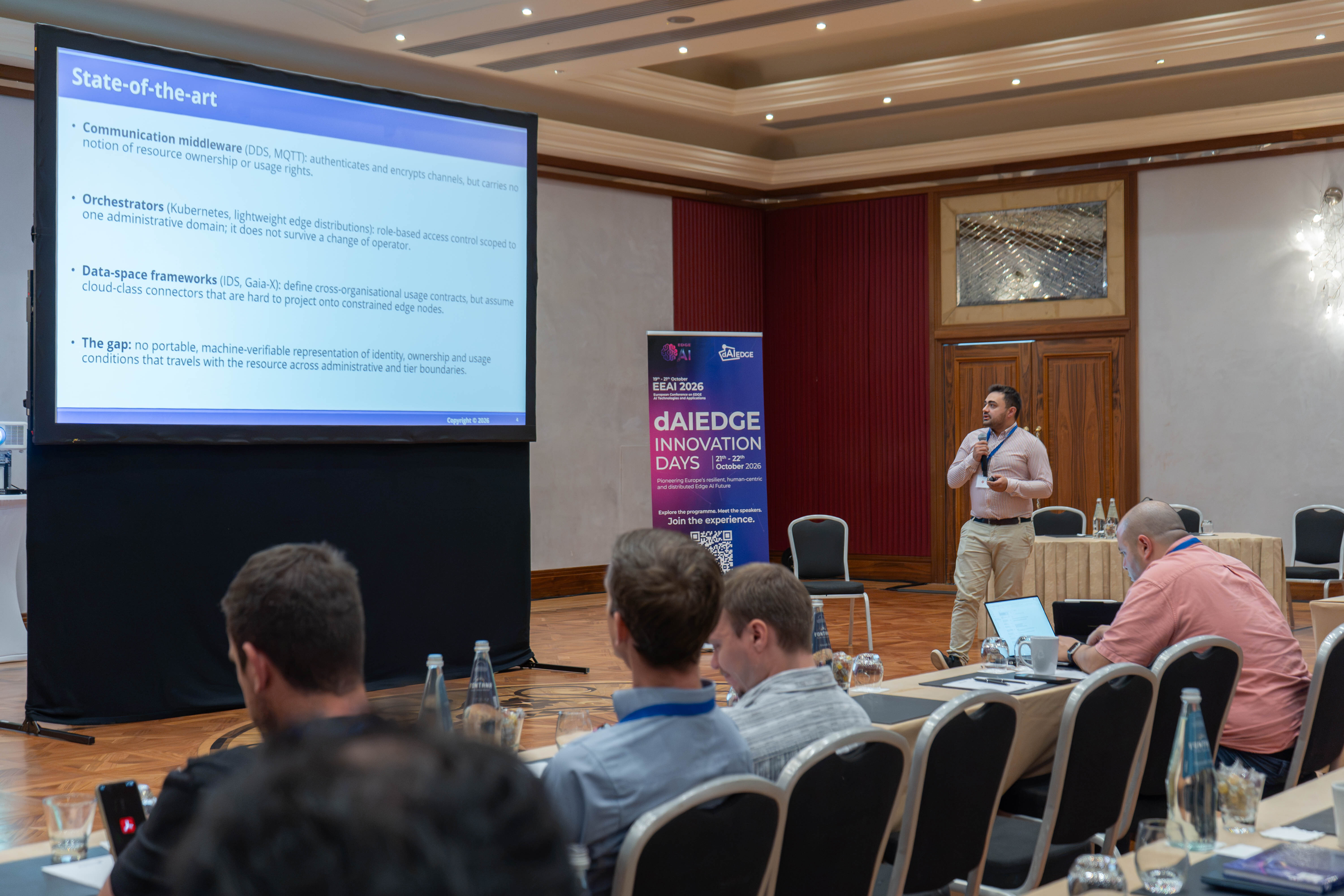
The session also addressed trust and resource management in distributed infrastructures. Raúl López Blanco from the University of Salamanca explored trust as a middleware layer through verifiable identity, licensing and provenance. Venkata Satya Sai Ajay Daliparthi from Blekinge Institute of Technology presented work on licence management for shared hardware in the dAIEDGE-VLab, while Thomas Dalgaty from CEA introduced probabilistic in-memory computing processors. The presentations concluded with a keynote by Paul Pietrangelo from Lira Ltd. on funding opportunities and strategies for Edge AI innovation.
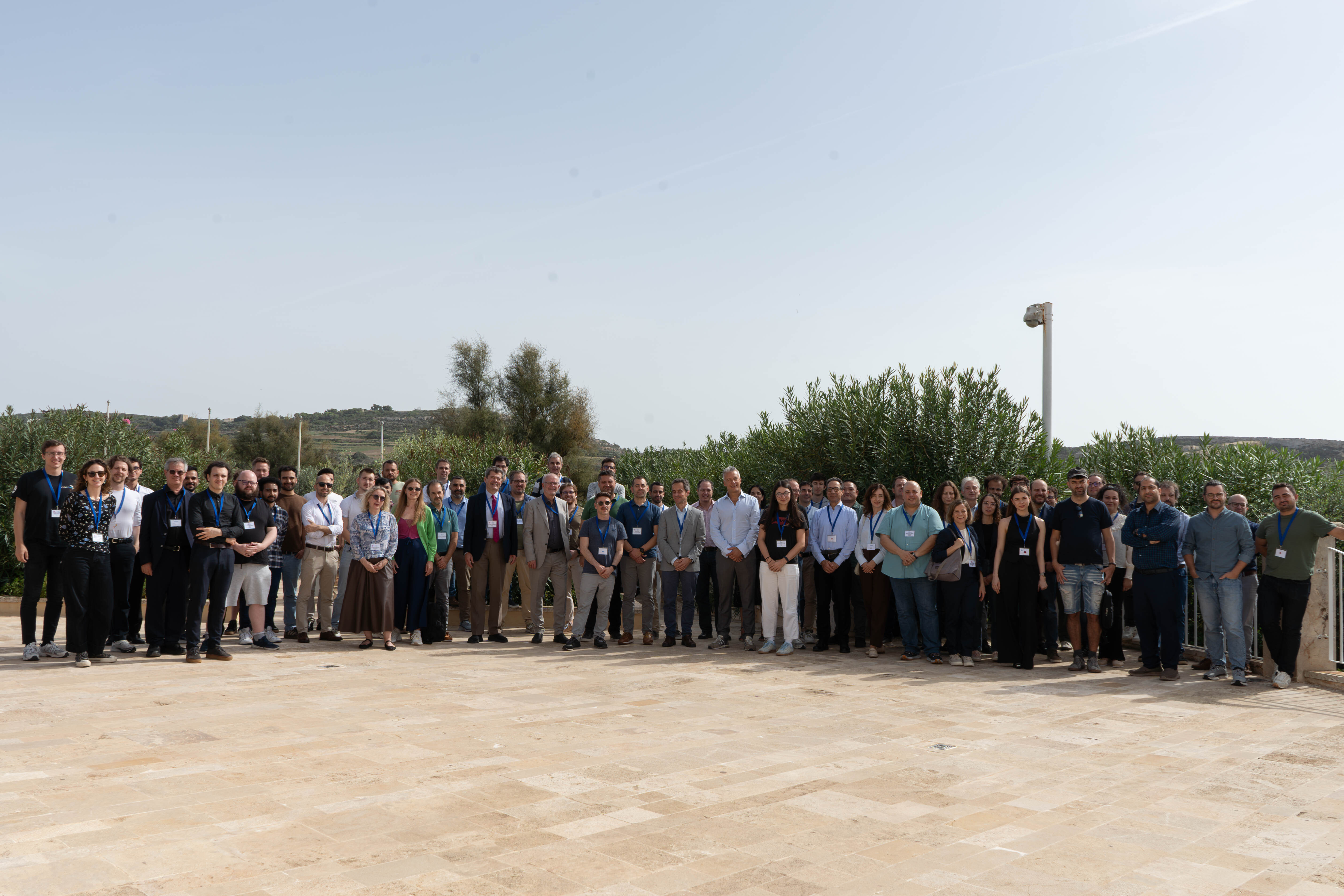
Beyond the presentations, participants had the opportunity to explore the technologies developed within the network through four live demonstrations and fourteen scientific posters. The demonstrations included hardware optimisation and benchmarking using dAIEDGE-VLab, policy-driven federated learning for heterogeneous edge devices, automated MLPerf evaluation and workflows for developing FPGA accelerators using hls4ml and SECDA-TFLite.
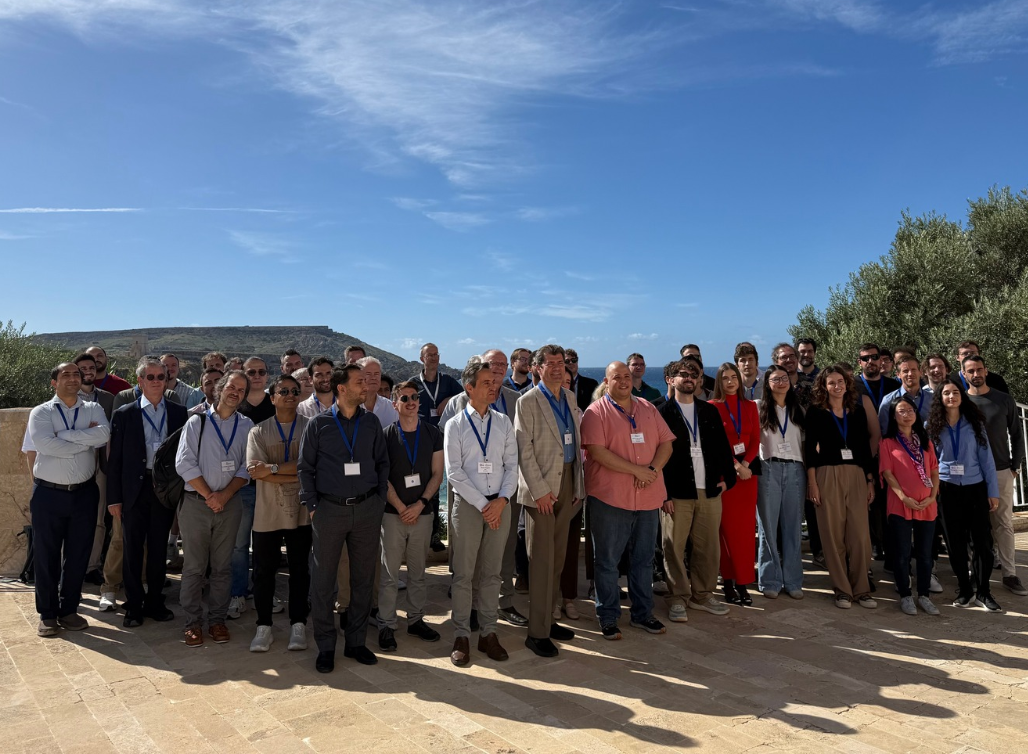
As dAIEDGE approaches the culmination of its project activities, the technologies, research outcomes and partnerships developed throughout the initiative provide a foundation for future collaboration and development. The Innovation Days were therefore not only an opportunity to look back at what has been achieved, but also to connect the people and ideas that will help shape the next generation of European Edge AI.