




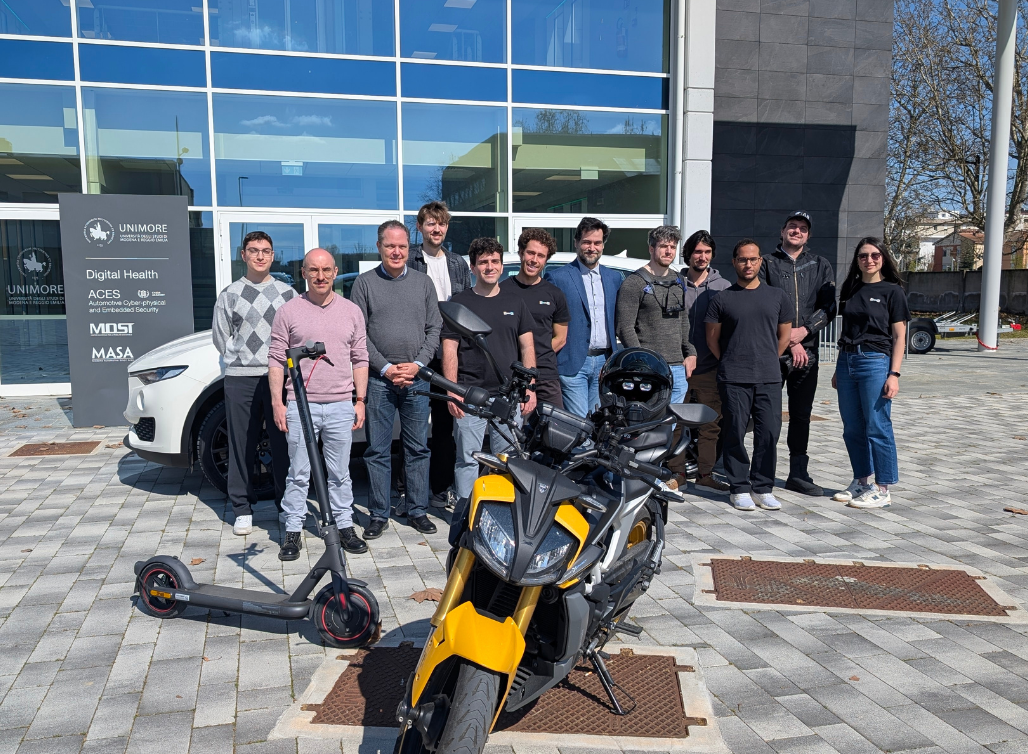
At dAIEDGE, we work on the understanding that innovation only makes sense when different technologies are able to work together in a real-world environment. Organised and coordinated by HiPERT, the week brought together teams from UNIMORE, Fraunhofer, the University of Castilla-La Mancha, AEGIS Rider and CSEM, whilst INSAIT, VERSES and DFKI also contributed to the demonstration online. Over the course of these days, the consortium worked together to ensure that every individual component, from hardware to software and network connectivity, could be integrated correctly.
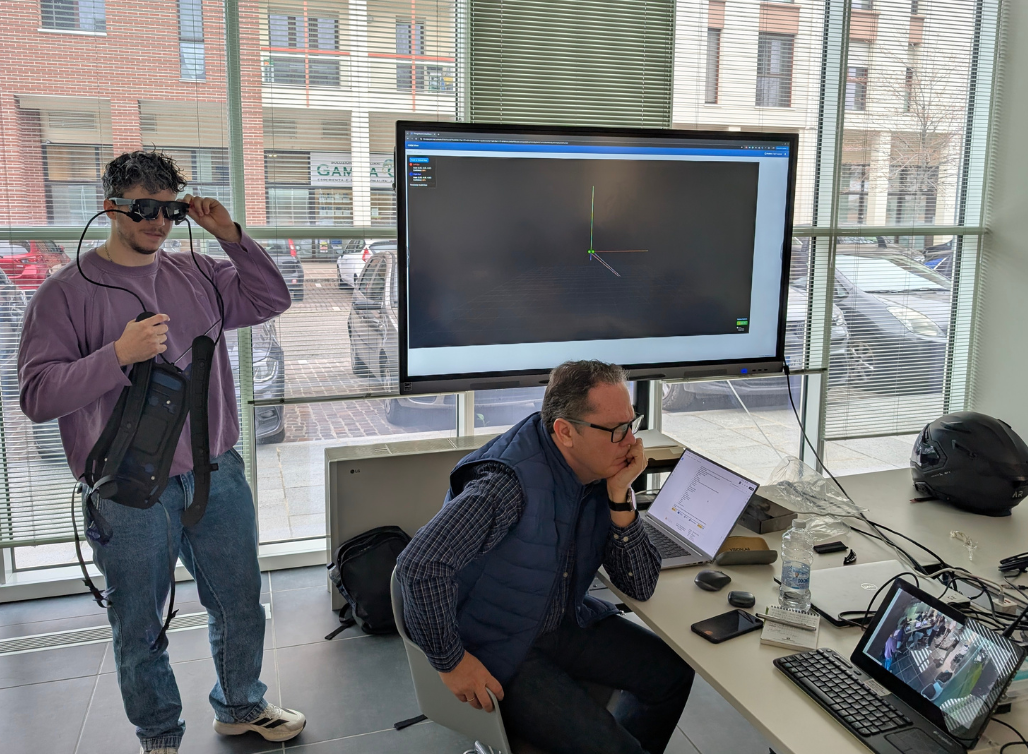
The first part of the week focused on preparing the technical environment. Each partner deployed and configured their own systems, whilst the consortium jointly tested the MASA network and verified that all devices and services could communicate correctly. Once the infrastructure was ready, we focused on full integration, with all partners testing their technologies together and fine-tuning the demonstrations that would showcase the project’s progress.
This collaborative project culminated in the dAIEDGE Demo Day held at MASA Modena, where the consortium presented not isolated developments, but a connected Smart City environment operating in real time.
At the heart of the demonstration was HAura, HiPERT’s Smart Roadside Unit, presented alongside the University of Modena and Reggio Emilia as coordinators of Use Case 1 – Smart City. HAura acts as a smart road safety infrastructure capable of detecting vulnerable road users, such as pedestrians and cyclists, and sharing this information with a latency of less than 100 milliseconds. More than just a standalone technology, HAura provided the common data layer that enabled the solutions from the different partners to work together.
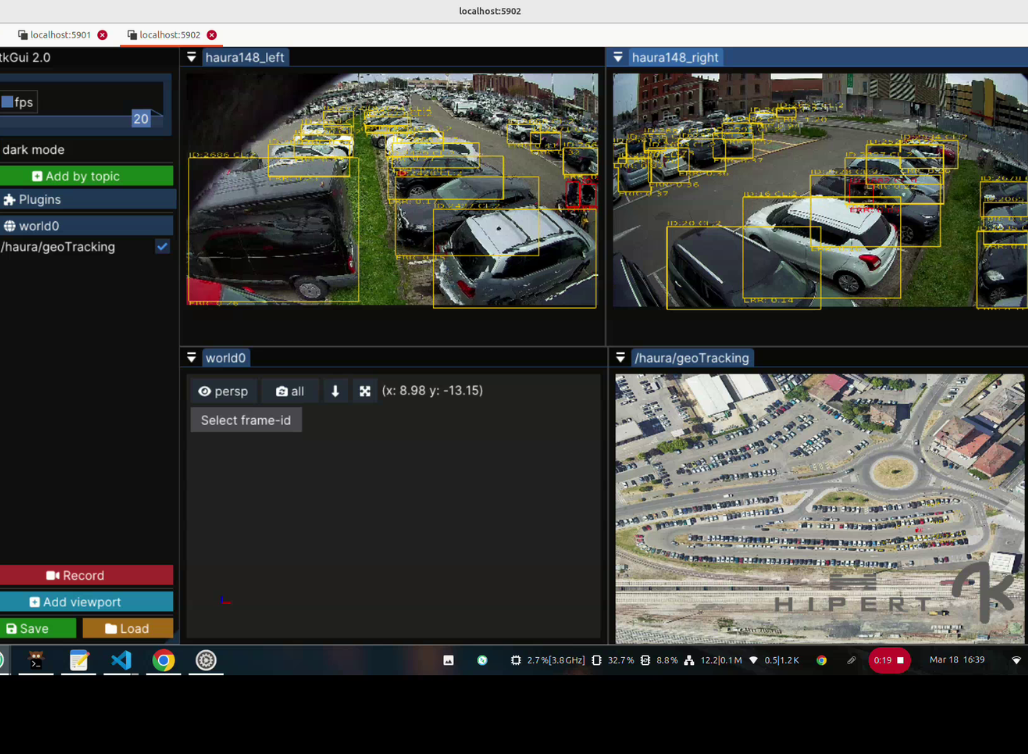
Using the information generated by HAura, AEGIS Rider displayed hazard alerts for motorcyclists via augmented reality integrated into a smart helmet, whilst CSEM monitored the attention and gaze direction of electric scooter users using smart glasses. At the same time, INSAIT and UNIMORE demonstrated artificial intelligence models for the recognition of vulnerable road users and smart parking management. DFKI worked on a Driver Monitor System on an FPGA, so alternative hardware (but still AI on edge); and Fraunhofer is missing with 6D Pose estimation on an event camera
What made this demonstration particularly valuable was not just the performance of each technology on its own, but the fact that they all operated as part of a single, coordinated system. Road infrastructure, artificial intelligence models, augmented reality, smart devices and edge computing interacted in real time, demonstrating that it is possible to create a Smart City ecosystem in which information is shared instantly and services can respond precisely when they are most needed.
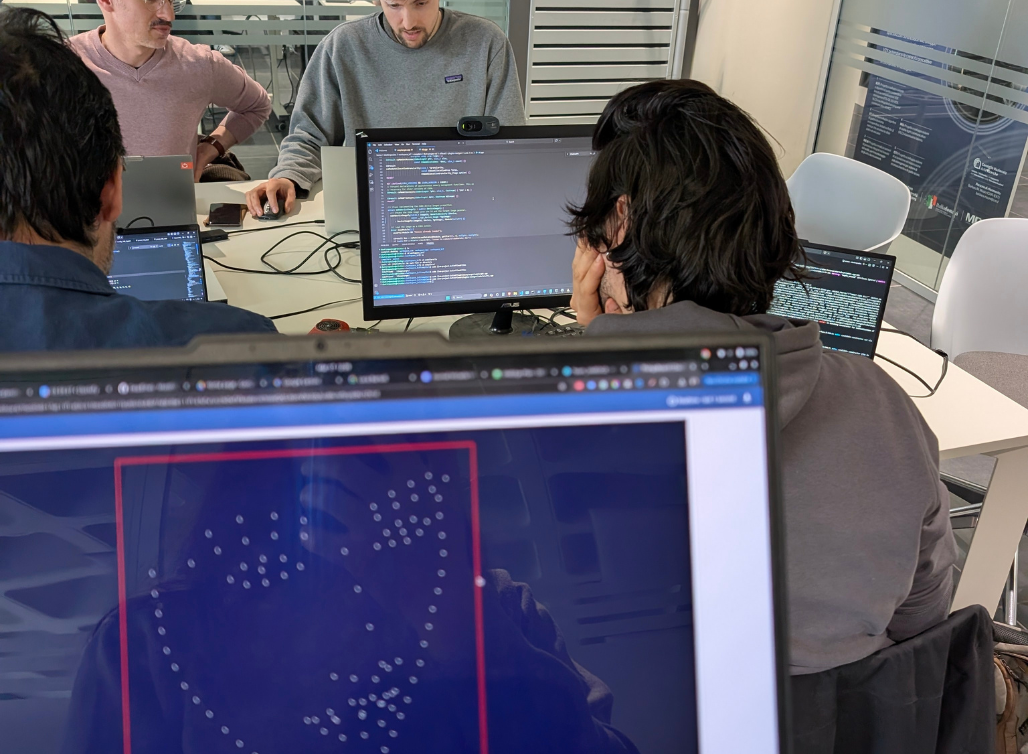
Integration Week demonstrated that, by combining the expertise of all partners, dAIEDGE can move beyond standalone prototypes and become a trusted, integrated system capable of improving road safety in real urban environments.
We would like to thank all our partners for their commitment and collaboration, as well as everyone who attended the demonstrations, exchanged ideas and helped make this milestone possible.