




Our recent Workshop on Edge AI and Robotics, held within the framework of HiPEAC, marked a milestone in strengthening the European ecosystem of Edge AI and responsible robotic systems. The event brought together researchers, industry experts, project managers and institutional representatives from across Europe, establishing itself as a leading forum for knowledge exchange, strategic reflection and interdisciplinary collaboration.
At a time when Edge AI is increasingly being integrated into real-world applications, with growing demands in terms of latency, energy efficiency, security and autonomy, this meeting provided a privileged forum to address the main technological, regulatory and social challenges associated with its deployment. At the same time, it enabled progress to be made on a shared vision of sovereign AI that is people-centred and aligned with European values and frameworks such as the AI Act.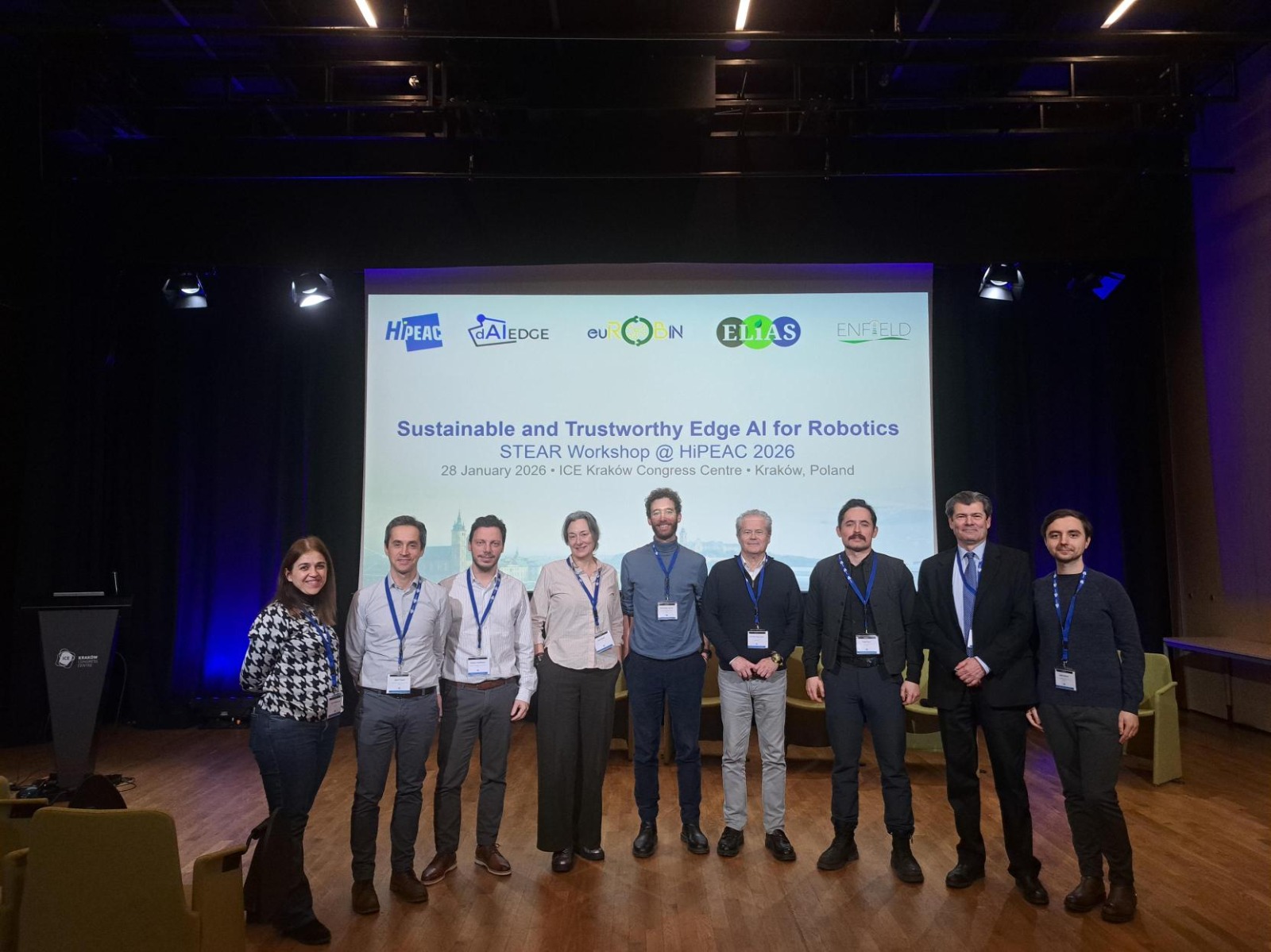
At dAIEDGE, we have had the privilege of playing a central role in organising and coordinating this conference, reaffirming our commitment to developing reliable, sustainable and ethically responsible Edge AI solutions. In this regard, we would like to highlight the main organizer of Mohamed Selim, dAIEDGE Project Manager, who, together with Cecilia Zanazzo (University of Trento), Georgios Kavallieratos (Norwegian University of Science and Technology (NTNU)), Lydia Belkadi (KU Leuven) and Rebecca Schedl-Warpup (German Aerospace Centre (DLR)), formed a highly committed organising team that made the event a success.
The workshop was jointly organised by four European Networks of Excellence: dAIEDGE, euROBIN, ELIAS and Horizon ENFIELD, demonstrating once again the value of cooperation between European initiatives to promote scientific excellence and knowledge transfer. The institutional opening allowed us to contextualise the work of these networks and highlight their contribution to the development of distributed, efficient and reliable artificial intelligence.
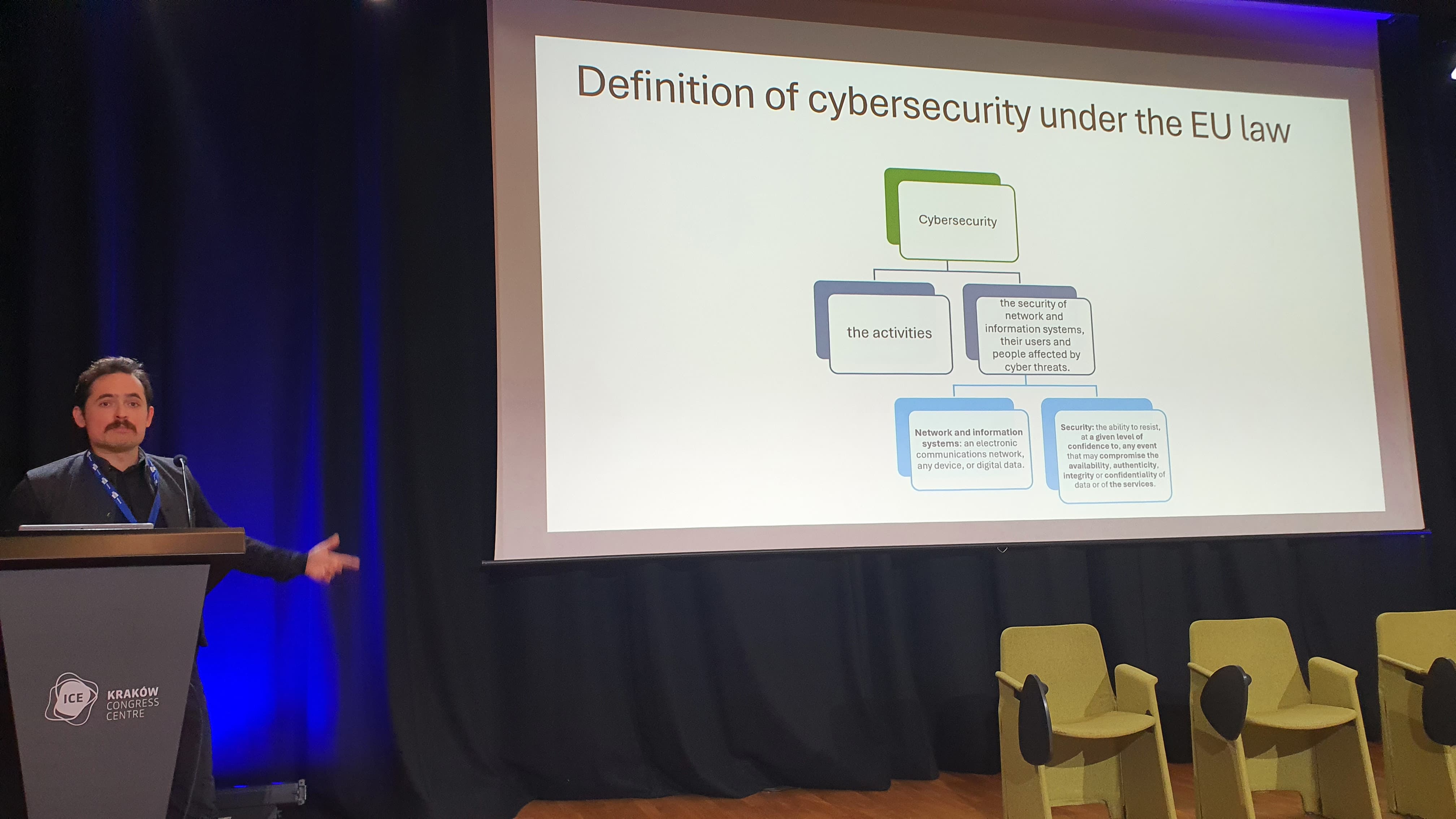
One of the cornerstones of the conference were the keynote speeches, which offered an in-depth and complementary view of the current challenges facing Edge AI and robotics. The presentations by Georgios Spathoulas, focusing on the integrity of AI as a Service models; Maximilian Durner, focusing on robust and adaptive robotic perception; Jean-Marc Bonnefous, focusing on European Edge AI and Robotics: Market Opportunities and Challenges; and Eyup Kun, dedicated to the impact of the AI Act and the Cyber Resilience Act, provided key perspectives from the fields of cybersecurity, engineering and digital law. Their contributions significantly enriched the debate and provided participants with conceptual and practical tools to address future challenges.
The technical sessions were another key feature of the workshop, showcasing the dynamism and quality of European research in this field. These sessions included presentations on model compression for low-power devices, regulation-aware continuous learning, ethics of portable AI, neuromorphic robotics, immersive teleoperation, and user experience design for explainable human-robot collaboration. These contributions reflected the collective effort to balance performance, sustainability, transparency and responsibility.
We would like to express our sincere gratitude to the session chairs, Georgios Kavallieratos and José Cano, for their excellent coordination and moderation, which ensured a rigorous, fluid and constructive scientific exchange.
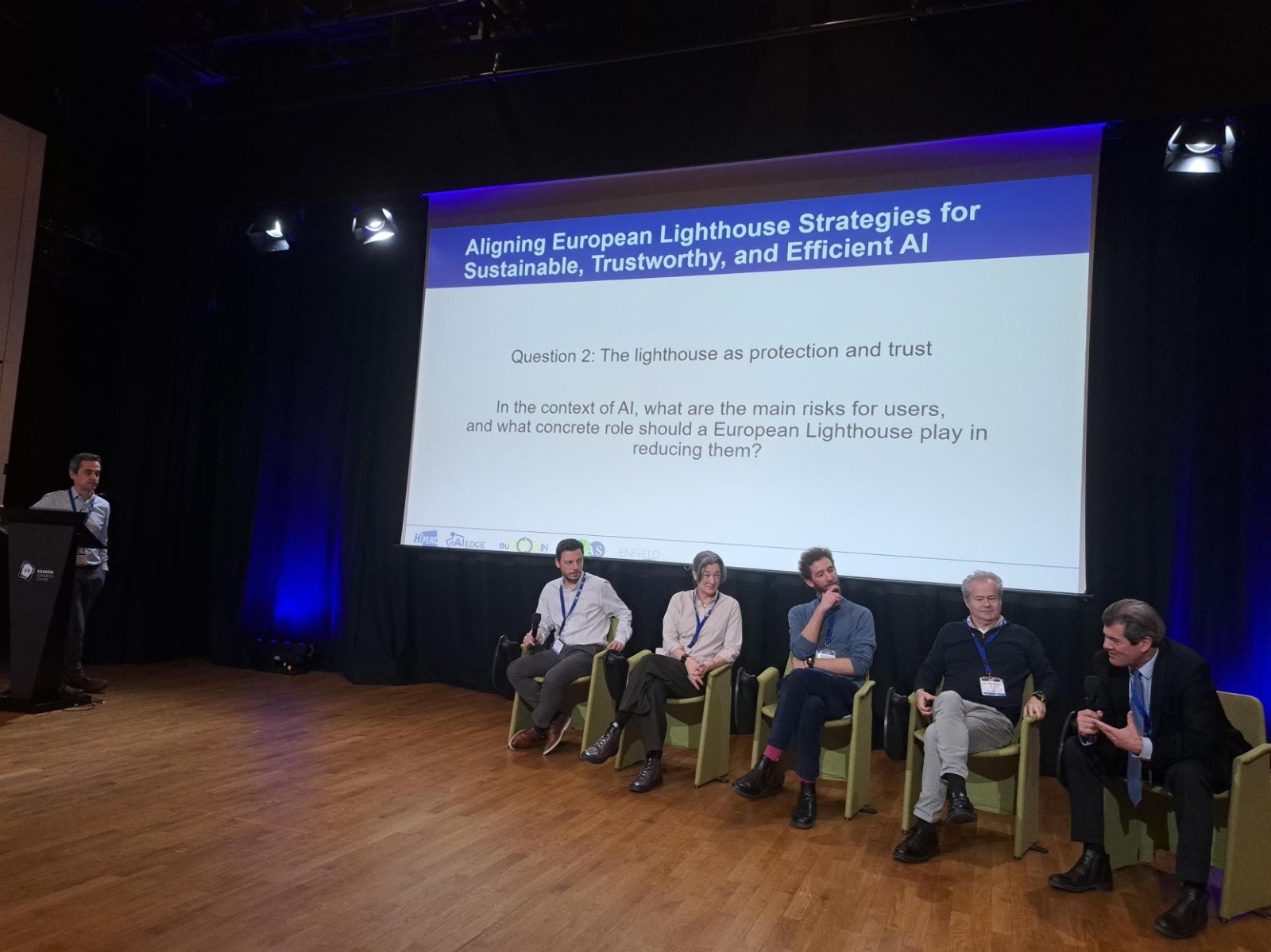
The workshop concluded with a strategic round table discussion that allowed participants to integrate the different perspectives presented throughout the day and reflect on future priorities for Europe in the field of Edge AI applied to robotics. This space for dialogue reinforced the importance of aligning research, industry and public policy to consolidate European leadership based on trust, sustainability and responsible innovation.
At dAIEDGE, we would like to sincerely thank all the speakers, authors, moderators and participants for their involvement, enthusiasm and willingness to collaborate. Their active contribution was decisive in making this event a real success and a high-impact meeting point for the community.
This workshop has demonstrated, once again, that technological progress can only be sustainable when it is supported by solid cooperation, a shared vision and a firm commitment to European values.